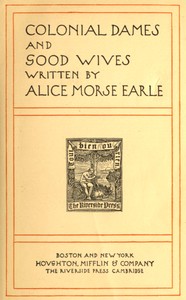
Colonial dames and good wives by Alice Morse Earle
I’m not gonna lie—when I first saw the title *Colonial Dames and Good Wives*, I pictured a dusty, old book full of weird dos and don’ts. But Alice Morse Earle's here to blow those notions out of the water. She’s like that chatty relative who unearths zany photos and wild stories from the family attic. This book gets into the nitty-gritty of women's lives in early New England.
The Story
This isn’t a straightforward narrative with a single plot. Instead, Earle offers up chapters on different facets of women's roles: the unmarried woman (the damsel), the bride, the 'Good Wife' (marriage), motherhood, widows, and even the law. She uses letters, diaries, court records, and newspaper ads. For example, one chapter covers the challenges of courtship—what happened if your dad disapproved? Spoiler: you might get sued. Another chapter looks at letters to absent husbands, who often left for months to set up homesteads or trade. The humor and grief bleed off the page. It's a mosaic rather than a smooth storyline, and that is exactly why it works: it feels real and broken up, like real life.
Why You Should Read It
Honestly, Earle avoids the boring stats (thank God) and captures the tense relationship between what society expected and what women actually wanted. I was genuinely surprised by the snappy replies found in wills (one widow demanding furniture she and her husband fought over). The theme? Society pushed for silence, but the recorded moments—bickering, stubbornness, acts of heroism—whisper of fire. Who knew tea parties were secret politics? There’s no martyrhood here either—Earle delivers the unsanitized ache but also the ingenuity of women running shops, scratching farms into existence, and influencing church votes.
Notable idea: One section about bound-out labor (indentured service) shows women could get brutal contracts, but also had contracts they fought in court. That little sign of agency spoke more to me than ten heroic bios. This is writing for anyone tired of hero-esque myths.
Final Verdict
Perfect for history nerds who want to geek out over the unvarnished—like a podcast mini-series. If you loved classic meets-cute background details (The Crucible novelization but less bite?) or had fun gabbing about laundry gossip, grab this. It’s an open window to the rigid china cabinet of society and also that tiny crack someone squeezed out of. For new readers not quite sold: start with chapter on weddings and work outward. I recommend revisiting afterwards—catches flyby comfort details that you miss first read. One big caution: Earle's at times given to righteous hindsight projections, but the intimate sourcing saves it. Overall, I left with respect for the shoulders behind modern indifference and the spice behind quiet manners sealed in ancient scrapbooks.
No rights are reserved for this publication. You are welcome to share this with anyone.