
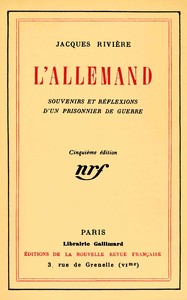
L'Allemand : souvenirs et réflexions d'un prisonnier de guerre by Jacques Rivière
Jacques Rivière was a French literary critic and editor, a man of letters, not a career soldier. When World War I broke out, he was called up. In 1914, his unit was overrun, and he was captured. L'Allemand is the journal he kept during his years as a prisoner of war in Germany.
The Story
The book follows Rivière from the shock of capture through the long, monotonous years of captivity. We don't get grand adventures or escape plots. Instead, we get the daily reality: the boredom, the hunger, the small humiliations. The heart of the story is his evolving relationship with his German guards and the civilian population he encounters. He's initially suspicious, viewing them through the lens of wartime propaganda as brutish 'Huns.' But forced into close quarters, that image cracks. He describes conversations, moments of unexpected kindness, and the shared, weary understanding between captor and captive that they are all trapped in a machine much larger than themselves. The narrative is a slow, careful observation of how prejudice breaks down under the weight of simple human contact.
Why You Should Read It
This book floored me because it's so personal and quiet. In an age where we're so quick to label 'the other side' as monsters, Rivière's journey is a powerful antidote. His writing is clear and introspective, not flowery. You feel his internal struggle—the patriotic Frenchman wrestling with the undeniable humanity of the German soldier sharing a cigarette with him. It’s not about forgiving atrocities; it's about recognizing that the man across from you has a family, fears the same artillery barrages, and just wants the war to end. It complicates the easy 'us vs. them' narrative in a way that feels incredibly modern.
Final Verdict
This is a perfect read for anyone interested in the human side of history, not just the dates and battles. If you liked the introspective feel of All Quiet on the Western Front but from the 'other side' of the wire, you'll find a companion here. It's also great for readers who enjoy first-person diaries and psychological depth. Fair warning: it's not a fast-paced thriller. It's a thoughtful, sometimes heavy, meditation on war, identity, and the lines we draw between people. A truly unique and memorable perspective from the Great War.
This digital edition is based on a public domain text. Knowledge should be free and accessible.
Joshua Jones
1 year agoText is crisp, making it easy to focus.
Donna Thomas
1 year agoBeautifully written.
Barbara Wilson
10 months agoHonestly, it challenges the reader's perspective in an intellectual way. A valuable addition to my collection.
Oliver White
7 months agoHaving read this twice, the emotional weight of the story is balanced perfectly. I learned so much from this.