About 413 minutes
Lucy Maud Montgomery Short Stories, 1905 to 1906 — Context and Discussion
Adventure Picaresque Fiction
94,864 recorded words. 37 minutes difference from this book's estimate.
View Gutenberg source #24876
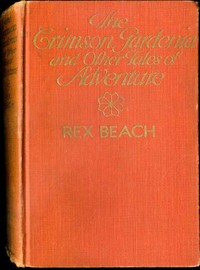
This digital edition of The Crimson Gardenia and Other Tales of Adventure — Reading Notes is described by source-level measurements including 86,289 words, 6 hr 16 min estimated reading time, and 8 detected text sections.
The text analysis averages about 15.8 words per sentence, while the detected sections provide another way to judge how the source is divided.
Project Gutenberg metadata also associates the work with “Fiction,” connecting these edition facts with the source record’s subject description.
Explore this collection
These alternatives are selected using recorded categories and estimated reading time.
About 413 minutes
Adventure Picaresque Fiction
94,864 recorded words. 37 minutes difference from this book's estimate.
View Gutenberg source #24876About 291 minutes
Adventure Picaresque Fiction
66,924 recorded words. 85 minutes difference from this book's estimate.
View Gutenberg source #24873About 285 minutes
Adventure Picaresque Fiction
65,331 recorded words. 91 minutes difference from this book's estimate.
View Gutenberg source #61701Search stored excerpts and compare books → Choose by your preferences →
Choices use stored catalog measurements. Estimates vary with reading speed. A shared category is a catalog label, not a claim that two books have the same argument or literary quality.
Search reads excerpt text stored with this catalog and links to its associated Gutenberg record. The connection is stored in the site database; this tool does not recheck that every excerpt is word-for-word identical to that external record. Excerpt search does not cover every chapter and does not verify historical publication dates.
Catalog snapshot checked: 2026-09-25. Coverage: 92 public books, 92 available source excerpts.
Read the complete public-domain text at its original source.
Read on Project GutenbergThe first tale, "The Crimson Gardenia," begins with a king's arrival amid cannon fire and bunting, observed by the jaded Mr. Roland Van Dam and his party. The prose dwells on sensory excess—"the street rocked to the roar of many voices"—while Eleanor Banniman dismisses the scene as dull. This contrast between public spectacle and private ennui sets a pattern for the collection: adventure is framed through the eyes of characters who are often detached or in crisis.
Later excerpts shift to a different register entirely. A man packs a vial of cocaine, paddles into a marsh, and stages his own suicide by swamping his canoe. The clinical detail—"twenty-five grains of powdered cocaine," "eight fatal doses"—gives way to a visceral struggle as instinct overrides intention. The collection thus moves from royal pageantry to a lonely, muddy death, suggesting Beach's range across adventure and psychological tension.
The opening of "The Crimson Gardenia" is built on a tension between grand display and the indifference of its observers. The king is tall and dark, the queen blushing, the streets lined with blue-coated officers and crowds "black with clustered humanity." Yet Roland Van Dam, the focal character, is described as "too highly schooled to allow himself much emotion," and his companions find the carnival dull. Beach lingers on the physical details—wire cables straining, stands groaning, goblin-costumed dancers—while the human response is languor. This juxtaposition recurs in the collection: adventure is staged, but the characters often fail to engage. The reader is invited to watch both the event and the watchers, noting how the prose amplifies the former while the latter shrink from it.
In a later excerpt, the narrative turns inward. A man prepares for suicide with methodical precision: he packs his guns, wires for a guide, carries a vial of cocaine. He writes letters, hunts alone, and stages a drowning. The prose becomes clinical—"twenty-five grains of it, eight fatal doses"—then shifts to raw physicality as he fights for air. The line "the blind instinct of self-preservation mastered him" captures the core irony: his plan is undone by his own body. Beach describes the struggle in detail: boots filling, lungs inhaling water, convulsions, and the sound of shouting. The scene ends with faces bending over him, leaving his fate ambiguous. This passage shows Beach's willingness to follow a character into the moment of crisis, tracking the gap between intention and instinct.
Beach uses setting not as backdrop but as an agent. The royal city is festooned and roaring, but the marsh in the suicide scene is empty: "acres upon acres, miles upon miles of waving marsh-grass interlaced with creeks and channels; nowhere was there a sign of human life." The canoe drifts; the Atlantic rumbles in the distance. The protagonist chooses this isolation deliberately, yet the marsh resists his plan—the cold water shocks him, the current works against him. In the opening tale, the city's energy overwhelms the characters; here, the marsh's emptiness swallows the man. Beach's environments are never neutral: they press on the action, forcing characters to react. Readers should attend to how each story's physical world shapes the choices available to its people.
The narrative voice in these excerpts is notably detached, even when describing extreme states. Roland Van Dam's thoughts are reported with a cool irony: "he felt, the members of his party might have shown at least a perfunctory appreciation." The suicide scene is rendered with a similar distance—"He marveled at his coolness"—before the prose fractures into short, gasping clauses. Beach often withholds interior commentary, letting action and sensory detail carry the weight. This creates a peculiar effect: the reader is close to the character's physical experience but kept at arm's length from their emotions. The result is a kind of documentary intensity, as if the narrator is recording events without judgment. For a first reading, note how this distance shapes your own engagement—are you drawn in or held back?
These excerpts suggest that Beach's adventure stories are less about heroic action than about the friction between human intention and the forces—social, physical, psychological—that thwart it. The collection rewards attention to small details: a character's posture, the weight of a garment, the color of a flower. Readers who approach each tale as a study in composure under pressure will find the prose opening onto unexpected depths. Let the settings guide you, and watch for the moment when control slips.
Some of that old book's gloomy beauty stayed with me—that man choosing the marsh. It felt less like spectacle and more like a quiet confession. I found a similar hush in the Arctic angels — Background and Themes pages, where the cold seems to press against everyone’s chosen silences, and I keep thinking about that too.
Capture what you thought, learned, and would like to remember.