About 482 minutes
The Best American Humorous Short Stories — Reading Notes
Adventure Picaresque Fiction
110,849 recorded words. 79 minutes difference from this book's estimate.
View Gutenberg source #10947
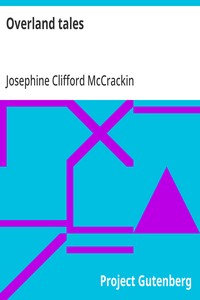
The catalog record for Overland tales — Key Ideas to Explore provides practical reading context through 128,823 words, 9 hr 21 min estimated reading time, and 12 detected text sections.
The text analysis averages about 26.6 words per sentence, while the detected sections provide another way to judge how the source is divided.
Project Gutenberg metadata also associates the work with “Western stories,” connecting these edition facts with the source record’s subject description.
Explore this collection
These alternatives are selected using recorded categories and estimated reading time.
About 482 minutes
Adventure Picaresque Fiction
110,849 recorded words. 79 minutes difference from this book's estimate.
View Gutenberg source #10947About 413 minutes
Adventure Picaresque Fiction
94,864 recorded words. 148 minutes difference from this book's estimate.
View Gutenberg source #24876About 376 minutes
Adventure Picaresque Fiction
86,289 recorded words. 185 minutes difference from this book's estimate.
View Gutenberg source #32101Search stored excerpts and compare books → Choose by your preferences →
Choices use stored catalog measurements. Estimates vary with reading speed. A shared category is a catalog label, not a claim that two books have the same argument or literary quality.
Search reads excerpt text stored with this catalog and links to its associated Gutenberg record. The connection is stored in the site database; this tool does not recheck that every excerpt is word-for-word identical to that external record. Excerpt search does not cover every chapter and does not verify historical publication dates.
Catalog snapshot checked: 2026-09-25. Coverage: 92 public books, 92 available source excerpts.
Read the complete public-domain text at its original source.
Read on Project GutenbergJosephine Clifford McCrackin opens her preface with a claim of fidelity: the stories and sketches in Overland Tales are, she says, “true to life—as I saw it.” The excerpts bear this out in their attention to sensory detail—the “scraggy, darkling willows” of Oatman's Flat, the “ghastly, water-bleached limbs” of uprooted trees—and in the narrator's habit of noting the scarcity of white women on the road. The authorial voice is observant, often wry, and unafraid to register unease.
McCrackin's prose is dense with physical particulars that anchor each scene. In “La Graciosa,” the description of the widow's face—“transparently pale, the faintest flush of pink tingeing the cheeks”—is matched by the careful rendering of the railroad car's social dynamics. In the Oatman's Flat passage, the landscape is personified: the willows “droop wearily,” the river acts in “annual frenzy.” Such word choices give the setting an emotional weight that anticipates the grim history of the site. The narrator does not simply report; she registers the uncanny, as when she accepts a “ghostly shadow” as “a part of the uncanny whole.” This diction—precise, slightly literary, yet grounded—creates a voice that is both a traveler's and a storyteller's.
Dialogue in the excerpts is spare but telling. When the narrator asks Sam, “Is there danger from Indians here?” his reply—“There hain't no Indians been seen around here for more'n three years”—is a model of laconic frontier speech. The grammar and rhythm mark him as a local, and the answer, while reassuring, does not fully dispel the tension. Later, at Burke's Station, the host calls out, “Here, Sis, come and speak to the lady,” and the narrator's response—“How in the world did you get here?”—reveals her surprise and her own outsider status. The dialogue is functional, advancing character and situation without ornament, and it contrasts with the more elaborate descriptive passages, giving the text a varied texture.
The collection's structure, as suggested by the table of contents, alternates between named stories (e.g., “La Graciosa,” “Juanita”) and sketches with descriptive titles (“Crossing the Arizona Deserts,” “A Lady in Camp”). The excerpts show a consistent first-person narrator who moves through landscapes and encounters, observing and reflecting. The pacing is unhurried; the narrator notes the “leisurely gait” of the mules and the “strange fascination” with which she watches the Oatman shanty. This structural choice—episodic, cumulative—mirrors the experience of overland travel itself: a series of vivid, sometimes unsettling moments linked by the road. The author does not force a unifying plot but lets the journey provide coherence.
A persistent thread in the excerpts is the narrator's awareness of gender. She notes that Sam assured her she would not see a white woman between Fort Yuma and Tucson—and then meets “not only one, but a whole family of them.” At Burke's Station, the young wife is introduced as “Sis,” a diminutive that underscores her youth and isolation. The narrator's own position as a woman traveling through male-dominated spaces gives her observations a particular edge: she is both participant and observer, subject to the same dangers and discomforts she describes. The recurring detail of the scarcity of women, and the narrator's relief or surprise at finding them, shapes the emotional landscape of these tales.
Readers approaching Overland Tales will find a work that resists easy categorization: part travelogue, part fiction, part memoir. McCrackin's authorial choices—in diction, dialogue, and structure—create a voice that is both of its time and strikingly immediate. The excerpts suggest a writer attentive to the physical and social textures of the frontier, and unafraid to let the landscape's darker tones emerge. The collection rewards a patient, observant reading, one that follows the narrator's gaze as it moves from the crowded railroad car to the lonely adobe station.
That rainy afternoon, McCrackin’s narrators lingered on the quiet loneliness of frontier women, and I found myself marking every other page, yes—but it was a stray line about a man’s stubborn pride that nudged me later toward the old Captain volume. Three short stories from "The Captain" volume XXVII How Dymock Came to Derry; Jack Devereux's Scoop; The Powder Hulk — Key Ideas to Explore had that same unforced feel, human folly treated gently, as if weather were just the excuse.
Create a short personal record of your experience with this book.