About 32 minutes
Nightmare on the nose — Context and Discussion
Fantasy Juvenile Worlds
7,143 recorded words. 0 minutes difference from this book's estimate.
View Gutenberg source #72489
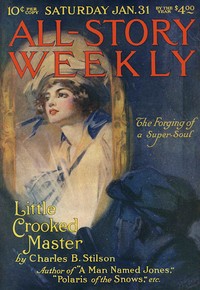
This digital edition of Over the Wire — A Closer Reading is described by source-level measurements including 7,237 words, 32 min estimated reading time, and 1 detected text section.
The text analysis averages about 14.8 words per sentence, while the detected sections provide another way to judge how the source is divided.
Project Gutenberg metadata also associates the work with “Short stories,” connecting these edition facts with the source record’s subject description.
Explore this collection
These alternatives are selected using recorded categories and estimated reading time.
About 32 minutes
Fantasy Juvenile Worlds
7,143 recorded words. 0 minutes difference from this book's estimate.
View Gutenberg source #72489About 33 minutes
Fantasy Juvenile Worlds
7,477 recorded words. 1 minutes difference from this book's estimate.
View Gutenberg source #66588About 34 minutes
Fantasy Juvenile Worlds
7,770 recorded words. 2 minutes difference from this book's estimate.
View Gutenberg source #32395Search stored excerpts and compare books → Choose by your preferences →
Choices use stored catalog measurements. Estimates vary with reading speed. A shared category is a catalog label, not a claim that two books have the same argument or literary quality.
Search reads excerpt text stored with this catalog and links to its associated Gutenberg record. The connection is stored in the site database; this tool does not recheck that every excerpt is word-for-word identical to that external record. Excerpt search does not cover every chapter and does not verify historical publication dates.
Catalog snapshot checked: 2026-09-25. Coverage: 92 public books, 92 available source excerpts.
Read the complete public-domain text at its original source.
Read on Project GutenbergThe story opens with the narrator trapped in a mountain tower during a blizzard, the storm shaking the structure "like you've seen a dog shake a rat." The telegraph key becomes a lifeline, and the narrator immediately establishes his partner Big Ben as a man whose Morse code flows "like a machine had hold of the key." The setting is claustrophobic and immediate: snow, semaphore lights, and a red-hot stove.
The narrative voice is colloquial and direct, addressing the reader as "you" and building tension through the accumulation of troubles—downed wires, a stalled freight, and the threat of the Limited. The story's structure moves from the tower's confinement to a desperate car ride down the mountain, then to the station where a corpse still rests on the key.
The story treats Morse code not as a mechanical signal but as an extension of personality. Big Ben's sending is described as "staccato, with a smooth flow" and he can "come mighty close to telling the color of your eyes over a telegraph-wire." The narrator contrasts this with Donaldson's "rotten, chattery" wire talk when he runs out of coal. The key itself becomes a character: Donaldson's dead hand still rests on it, and the mystery hinges on a message sent after his death. The telegraph is the medium through which the supernatural intrudes—a dead man's signal that warns of cross-ties chained to the track.
The storm is not mere backdrop; it drives the plot and shapes the characters' actions. Snow and ice are the first words of the story, and the blizzard "took the tower in its teeth." The narrator describes the cold as "biting pain" and the car's headlights ending "in a whirling bank of snow." The storm isolates the tower, cuts communication, and nearly prevents the rescue. It also provides cover for the bandits and makes the final race against time a physical battle against the elements. The snow clings to wheels, and tire-chains spin "in red clay which flecked the white of the road like blood."
The story's structure alternates between enclosed, safe spaces and the exposed, dangerous outside. The tower is "warm and cozy" with a red-hot stove, but the storm shakes it. The car is a fragile shell pitching "like a ship in a storm." The station at Hastings initially appears as a haven—a light in the blizzard—but becomes the site of horror. The narrator's journey is a descent from the tower down the mountain, and each shift in location raises the stakes. The final revelation occurs in the ticket office, a confined space that contains the dead agent and the impossible message.
Light and sound are used to mark danger and safety. The semaphore lights are blurred by snow; the Limited's headlight "flickered across the cut, touching the station with uncertain fingers." The furnace door of the train flashes. The sound of the Limited's whistle wails above them, and the torpedoes under the pilot provide the final warning. The narrator's prayer is silent, but the shriek of the train is audible. These sensory details anchor the reader in the moment and heighten the tension, especially when the green semaphore—normally a safe signal—becomes a trap.
The story's power lies in its economy: a single night, a handful of characters, and one impossible event. The narrator's final line—"I'm through!"—suggests the psychological cost of encountering the uncanny. Readers should pay attention to how the author uses the telegraph as both a plot device and a symbol of connection across the boundary of life and death. The blizzard is not just weather; it is the medium through which the story's horror emerges.
That night in Over the Wire, with Big Ben’s silent fingers reading the dead man’s tapping, I felt how a message outlives its sender. It reminded me of another quiet thread between loss and voice, in The Lost Child — Text and Context, where a story’s missing pieces still speak. Pages hold what people cannot. That’s all.
Save your reaction, strongest insight, and memorable passage.


![Cover of Some Short Stories [by Henry James] — Inside the Classic](https://cuiep.com/storage/media/covers/pg2327.jpg)






