About 32 minutes
Over the Wire — A Closer Reading
Fantasy Juvenile Worlds
7,237 recorded words. 0 minutes difference from this book's estimate.
View Gutenberg source #67496
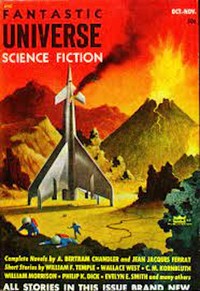
The source record for Nightmare on the nose — Context and Discussion measures this digital text at 7,143 words, 32 min estimated reading time, and 1 detected text section.
The text analysis averages about 13.3 words per sentence, while the detected sections provide another way to judge how the source is divided.
Project Gutenberg metadata also associates the work with “Short stories,” connecting these edition facts with the source record’s subject description.
Explore this collection
These alternatives are selected using recorded categories and estimated reading time.
About 32 minutes
Fantasy Juvenile Worlds
7,237 recorded words. 0 minutes difference from this book's estimate.
View Gutenberg source #67496About 33 minutes
Fantasy Juvenile Worlds
7,477 recorded words. 1 minutes difference from this book's estimate.
View Gutenberg source #66588About 34 minutes
Fantasy Juvenile Worlds
7,770 recorded words. 2 minutes difference from this book's estimate.
View Gutenberg source #32395Search stored excerpts and compare books → Choose by your preferences →
Choices use stored catalog measurements. Estimates vary with reading speed. A shared category is a catalog label, not a claim that two books have the same argument or literary quality.
Search reads excerpt text stored with this catalog and links to its associated Gutenberg record. The connection is stored in the site database; this tool does not recheck that every excerpt is word-for-word identical to that external record. Excerpt search does not cover every chapter and does not verify historical publication dates.
Catalog snapshot checked: 2026-09-25. Coverage: 92 public books, 92 available source excerpts.
Read the complete public-domain text at its original source.
Read on Project GutenbergThe story opens not at the track but in a bedroom, where Phil Watson's losing streak manifests as a literal nightmare: a horse named Incubus sits on his chest, complains about his restlessness, and challenges him to canasta. This domestic, almost mundane supernatural encounter sets a comic tone that persists throughout. The nightmare's voice—snappy, defensive, and colloquial—immediately establishes her as a character with agency, not merely a symbol of Watson's financial woes.
Readers should note how Smith uses the nightmare's physical presence (hooves, teeth, weight) to ground the fantasy in tactile reality. The opening's dialogue-driven humor and the nightmare's offer to race at "the velocity of sound" hint at the story's central conceit: a supernatural creature forced into the mundane world of horse racing.
The transition from nightmare to racehorse is swift and pragmatic. Watson's idea—"how'd you like to run in a race?"—is met with Incubus's immediate, cynical agreement. The middle excerpts show the pair navigating the racing world: entering Incubus in an allowance race, dealing with the racing secretary's skepticism, and winning handily. Smith keeps the focus on logistics and dialogue rather than explaining the supernatural mechanics. The story never clarifies how Incubus appears as a horse to others or how her supernatural speed works; readers must accept the premise as given.
Notable is the recurring motif of fairness. Incubus initially worries about cheating, but Watson dismisses her scruples. Later, the horse Pamplemousse convinces her that competing is unethical, introducing a moral dimension that complicates the simple wish-fulfillment plot. The middle sections thus shift from pure comedy to a subtle exploration of what it means to be a "stake horse" among claimers.
Incubus's romance with Pamplemousse—a claimer who lectures her on ethics—introduces a sentimental subplot that undercuts the earlier cynicism. Smith handles the pregnancy with deadpan humor: Watson asks "how could you do it?" and Incubus snickers, "I have my methods." The foal's "bend sinister" (a heraldic term for illegitimacy) is a wry nod to the impossibility of registering a supernatural horse's offspring.
This section deepens Incubus's character beyond the wisecracking nightmare. She chooses loyalty to Watson over love, winning the Belmont Futurity before revealing her pregnancy. The emotional register shifts from farce to genuine pathos, preparing readers for the story's conclusion. The middle excerpts show Smith balancing multiple tones—comic, romantic, and melancholic—within a tight word count.
The closing excerpts deliver the story's emotional payoff: Incubus must return to her supernatural origins because "the Big Bookie" decrees it. Her farewell speech—"I had my baby tonight, Watson. Take good care of her"—is poignant but undercut by her earlier snark. The foal, half-equine, can remain on Earth, and Prunella will help raise it. Watson's vow to care for the baby provides a bittersweet resolution that avoids sentimentality.
Readers should note that the story never explains who or what the Big Bookie is, nor does it detail Incubus's original punishment. The ending relies on the emotional weight of the relationship built over the preceding pages, not on world-building. The final image—a foal that "will be the fastest thing on earth"—leaves the door open for future adventures while closing Incubus's arc with dignity.
Smith's prose is efficient and dialogue-driven. Key observations for a first reading:
Approach Nightmare on the Nose as a character-driven fantasy that uses horse racing as a backdrop for a story about loyalty, love, and the cost of winning. The supernatural elements are never over-explained; instead, Smith trusts the reader to accept a talking, card-playing horse as a given. Pay attention to how Incubus's voice evolves from abrasive to tender, and how the story's humor gives way to genuine emotion without losing its edge. The ending, while bittersweet, feels earned because the relationship between Watson and Incubus has been built through shared victories and quiet conversations in the stable.
The odd, bittersweet way Incubus finally leaves the gambler stayed with me. It felt less like a punchline and more like a quiet farewell, the sort of gentle, strange melancholy you find at the end of a good campfire tale. That lingering warmth reminded me of The Boy Scouts Book of Campfire Stories — A Closer Reading, where every story’s ending seems to hold its breath, too.
Your answers remain private and are stored only in this browser.


![Cover of Some Short Stories [by Henry James] — Inside the Classic](https://cuiep.com/storage/media/covers/pg2327.jpg)






