About 34 minutes
No Strings Attached — Key Ideas to Explore
Fantasy Juvenile Worlds
7,770 recorded words. 1 minutes difference from this book's estimate.
View Gutenberg source #32395
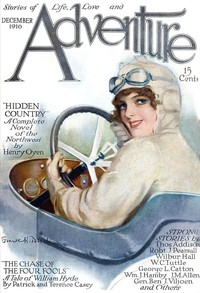
This digital edition of A Man-Sized Pet — Text and Context is described by source-level measurements including 7,477 words, 33 min estimated reading time, and 1 detected text section.
The text analysis averages about 16.4 words per sentence, while the detected sections provide another way to judge how the source is divided.
Project Gutenberg metadata also associates the work with “Short stories,” connecting these edition facts with the source record’s subject description.
Explore this collection
These alternatives are selected using recorded categories and estimated reading time.
About 34 minutes
Fantasy Juvenile Worlds
7,770 recorded words. 1 minutes difference from this book's estimate.
View Gutenberg source #32395About 32 minutes
Fantasy Juvenile Worlds
7,237 recorded words. 1 minutes difference from this book's estimate.
View Gutenberg source #67496About 32 minutes
Fantasy Juvenile Worlds
7,143 recorded words. 1 minutes difference from this book's estimate.
View Gutenberg source #72489Search stored excerpts and compare books → Choose by your preferences →
Choices use stored catalog measurements. Estimates vary with reading speed. A shared category is a catalog label, not a claim that two books have the same argument or literary quality.
Search reads excerpt text stored with this catalog and links to its associated Gutenberg record. The connection is stored in the site database; this tool does not recheck that every excerpt is word-for-word identical to that external record. Excerpt search does not cover every chapter and does not verify historical publication dates.
Catalog snapshot checked: 2026-09-25. Coverage: 92 public books, 92 available source excerpts.
Read the complete public-domain text at its original source.
Read on Project GutenbergThe first sentence of W. C. Tuttle's A Man-Sized Pet calls the group around Magpie Simpkins's pine table "incongruous," and the description that follows earns that word. Magpie, six feet two and slender, wears glasses without bows on a silk ribbon; Tellurium Woods is as fat as any outdoor man could be, with a bald head and a brown beard that blurs into his buckskin shirt; Bantie Weyman, five feet two, has a soprano voice, a gold tooth, and—unlike anyone else on the range—takes baths. These three represent the entire social column of Sleeping Creek, and their private pitch club meets with a bear, a wolf, and a kitten in attendance.
The story's central joke is that each man's pet mirrors his owner's character—or perhaps his blind spot. Magpie's grizzly is described as a "li'l grizzly" and a "pet," but it is large enough to put its nose in Bantie's ear during a card game. Tellurium keeps a wolf under his bunk, a predator that Bantie complains he must look into the "shinin' eyes" of every time he turns to spit. Bantie himself, the timid one who won't pack a gun, owns only a kitten—until the climax reveals he has also acquired a full-grown wildcat. The pets are not merely comic props; they escalate the tension between the men's self-images and their actual situations. Magpie, the would-be scholar, cannot control his bear; Tellurium, the burly outdoorsman, has a wolf that flees at the first real trouble; Bantie, the nervous baker, ends up with the most effective predator of all.
Tuttle's dialogue carries the story. The three men speak in a similar western vernacular—"yuh" for "you," "th'" for "the," "shore" for "sure"—but their rhythms differ. Magpie's lines tend toward mock-formality: "I'd shore admire to know what happened?" he says after a dunking. Tellurium booms and repeats: "Be uh man, Bantie. That pore li'l grizzly won't hurt yuh." Bantie's speech is high-pitched and precise: "I ain't goin' to riffle another card until yuh puts that emblem uh California out in th' shed, sabe?" The narrator's voice, meanwhile, is dry and slightly literary, using words like "incongruous" and "emaciation" that contrast with the characters' rough talk. This gap between the narrator's vocabulary and the characters' dialect creates a wry, knowing tone that keeps the comedy from becoming merely slapstick.
The plot moves through a series of symmetrical reversals. The first scene establishes a hierarchy: Magpie and Tellurium laugh at Bantie's fear of the bear and wolf. But by the end, Bantie has outsmarted them both, trapping their pets in his root-house and revealing his own wildcat. The chase sequence—bear and wolf fleeing, men tumbling into the creek—reverses the expected outcome: the predators run, the men get wet, and the timid character wins. Tuttle builds this reversal through careful pacing. The card game establishes the pets as nuisances; the chase accelerates into physical comedy; the final reveal in the root-house delivers the punch line. Each stage depends on the reader's memory of earlier details: the wolf's "shinin' eyes," the bear's melancholy gaze, Bantie's soprano voice. The structure rewards attention to small, recurring observations.
Readers who enjoy comic westerns with a touch of absurdity will find A Man-Sized Pet a brisk, satisfying story. Pay attention to the way Tuttle uses physical description—the glasses on a ribbon, the buckskin shirt that merges with skin, the gold tooth—to establish character quickly. The pets are not just jokes; they are instruments of comeuppance. The story's humor depends on the gap between what the characters claim to be and what they actually are, a gap that Tuttle exploits with precision and economy.
Reading about that bear tangled in the mining camp’s laundry line, I thought of my uncle’s old terrier, who once dragged a skunk through our porch screen. There’s a quiet reckoning in chaos, isn’t there? Henry James gave me that same feeling of watching order dissolve gently, not violently. His restraint makes the mess almost tender. Some Short Stories [by Henry James] — Inside the Classic sat beside my bed for years, but I only remember the dog now.
Your answers remain private and are stored only in this browser.


![Cover of Some Short Stories [by Henry James] — Inside the Classic](https://cuiep.com/storage/media/covers/pg2327.jpg)






