About 31 minutes
The Ghost in the Red Shirt — Reading Notes
Science Fiction Utopias
6,911 recorded words. 1 minutes difference from this book's estimate.
View Gutenberg source #67319
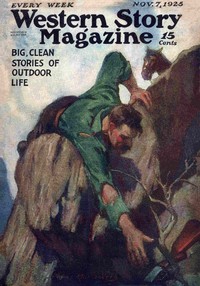
A knife in time — Reading Notes can be approached with a clearer sense of reading commitment from its source measurements: 7,294 words, 32 min estimated reading time, and 1 detected text section.
The text analysis averages about 20.2 words per sentence, while the detected sections provide another way to judge how the source is divided.
Project Gutenberg metadata also associates the work with “Short stories,” connecting these edition facts with the source record’s subject description.
Explore this collection
These alternatives are selected using recorded categories and estimated reading time.
About 31 minutes
Science Fiction Utopias
6,911 recorded words. 1 minutes difference from this book's estimate.
View Gutenberg source #67319About 34 minutes
Science Fiction Utopias
7,782 recorded words. 2 minutes difference from this book's estimate.
View Gutenberg source #65489About 34 minutes
Science Fiction Utopias
7,675 recorded words. 2 minutes difference from this book's estimate.
View Gutenberg source #68975Search stored excerpts and compare books → Choose by your preferences →
Choices use stored catalog measurements. Estimates vary with reading speed. A shared category is a catalog label, not a claim that two books have the same argument or literary quality.
Search reads excerpt text stored with this catalog and links to its associated Gutenberg record. The connection is stored in the site database; this tool does not recheck that every excerpt is word-for-word identical to that external record. Excerpt search does not cover every chapter and does not verify historical publication dates.
Catalog snapshot checked: 2026-09-25. Coverage: 92 public books, 92 available source excerpts.
Read the complete public-domain text at its original source.
Read on Project GutenbergRay Humphreys’s “A Knife in Time” opens with a practical problem: good mule skinners are scarce, so Tom Morgan’s skill with a six-mule hitch outweighs the unease his visible sheath knife causes. The wagon boss McCarthy hires him despite the knife, but the crew’s hostility escalates. The story’s central tension is not between Morgan and external threats, but between the crew’s assumption that the knife signals a violent nature and Morgan’s silent, unexplained attachment to it. The excerpts show how this misunderstanding drives conflict, with Morgan reddening and flaring up under persecution, yet never discarding the blade. The narrative voice, clipped and colloquial, mirrors the freight camp’s bluntness, while the knife itself becomes a recurring focal point—a detail that the story refuses to let the reader forget.
The knife is introduced as a visual anomaly: Morgan carries it “in plain view,” and McCarthy immediately questions it. The crew’s reaction is swift and hostile. “Big Jim” Williams calls Morgan “a knife thrower” and “the little runt,” while another driver says, “I’d not trust him far behind me back.” These remarks are meant to be overheard, and Morgan hears them. The persecution grows worse, and McCarthy fears violence—not from the crew, but from Morgan. The wagon boss’s internal debate reveals the story’s economic stakes: firing Morgan would leave a six-mule team idle, angering the owner. The knife thus becomes a symbol of perceived threat, but the narrative withholds any evidence that Morgan has used it aggressively. Instead, the conflict is entirely social, built on suspicion and the crew’s code of “white” fighting.
The climax occurs during a runaway team incident. Morgan, riding a black mule, sees a fallen rider (Ashton) being dragged by a sorrel. He transfers from mule to mule “at a good gallop,” beats the sorrel’s head to turn it, and then uses his knife to cut the stirrup strap, freeing Ashton. The knife “flashed in the afternoon sun” as it saves a life. Immediately after, Morgan is found sobbing over his dead near leader, Blackie, who died in the crash. The emotional pivot is sharp: the knife that caused his ostracism now proves its utility. McCarthy’s reaction—“Yuh bawlin’ over a daid mule when the big boss is half kilt?”—underscores the mismatch between Morgan’s grief and the crew’s expectations. The rescue recontextualizes the knife, but Morgan’s tears show his priorities lie with his team, not with vindication.
In the hospital tent, Morgan finally explains why he carries the knife: he once lost a team of mules over a ledge in the Carolinas and could have saved the wheelers if he’d had a knife. “I didn’t—an’ since then I’ve carried that knife.” This backstory, revealed only at the end, reframes the knife as a tool of prevention, not aggression. Ashton, the boss, responds with gratitude and offers Morgan a promotion to assistant wagon boss, where he will be expected to wear a coat—hiding the knife from view. Morgan insists he will continue to carry it, and Ashton approves. The resolution is pragmatic: the knife remains, but its visibility is suppressed by corporate dress code. The story closes the tension between appearance and reality, but does not erase the knife; it simply moves it out of sight.
The story’s structure—a slow build of social friction followed by a rapid, action-driven rescue—mirrors the Western genre’s typical arc, but Humphreys subverts expectations by making the hero’s defining trait a tool rather than a weapon. Readers may note how the narrative withholds Morgan’s motive until the final pages, forcing the audience to share the crew’s misjudgment. The knife, initially a mark of otherness, becomes a symbol of practical wisdom earned through loss. The promotion and coat requirement offer a wry conclusion: the knife stays, but only if it is not seen.
That knife stayed with me—how something so plain could quietly wait until the moment it truly mattered. Reading A Knife in Time felt like that. It reminded me of another old collection, On Secret Service Detective-Mystery Stories Based on Real Cases Solved by Government Agents — Inside the Classic, where small details also carry hidden weight. Sometimes the simplest object, or the quietest clue, holds the whole story inside it.
Build a private reading journal entry for this title.