About 27 minutes
And All the Girls Were Nude — A Closer Reading
Science Fiction Utopias
6,015 recorded words. 0 minutes difference from this book's estimate.
View Gutenberg source #66432
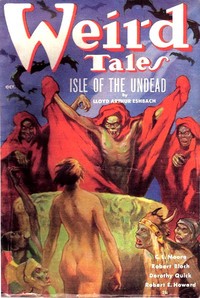
This digital edition of The Secret of Kralitz — Edition Insights is described by source-level measurements including 6,017 words, 27 min estimated reading time, and 1 detected text section.
The text analysis averages about 22.0 words per sentence, while the detected sections provide another way to judge how the source is divided.
Project Gutenberg metadata also associates the work with “Short stories,” connecting these edition facts with the source record’s subject description.
Explore this collection
These alternatives are selected using recorded categories and estimated reading time.
About 27 minutes
Science Fiction Utopias
6,015 recorded words. 0 minutes difference from this book's estimate.
View Gutenberg source #66432About 25 minutes
Science Fiction Utopias
5,649 recorded words. 2 minutes difference from this book's estimate.
View Gutenberg source #74145About 31 minutes
Science Fiction Utopias
6,911 recorded words. 4 minutes difference from this book's estimate.
View Gutenberg source #67319Search stored excerpts and compare books → Choose by your preferences →
Choices use stored catalog measurements. Estimates vary with reading speed. A shared category is a catalog label, not a claim that two books have the same argument or literary quality.
Search reads excerpt text stored with this catalog and links to its associated Gutenberg record. The connection is stored in the site database; this tool does not recheck that every excerpt is word-for-word identical to that external record. Excerpt search does not cover every chapter and does not verify historical publication dates.
Catalog snapshot checked: 2026-09-25. Coverage: 92 public books, 92 available source excerpts.
Read the complete public-domain text at its original source.
Read on Project GutenbergThe story opens with Franz, the twenty-first Baron Kralitz, being roused from sleep by two black-swathed figures who lead him through gloomy corridors. He recalls his father's deathbed words about a curse on the House of Kralitz, originating from the first Baron's massacre of monks and the Abbot's curse. The secret is passed to the eldest son at a certain time, and Franz has long expected this midnight summons.
The narrative immediately establishes a Gothic atmosphere: a castle, a hereditary curse, and a protagonist who knows he is about to learn a dreadful truth. The father's speech is notably forceful—no gasping deathbed confession—and the secret is explicitly tied to an underground cavern and the ruins of a burned monastery.
The story's opening emphasizes the burden of lineage. Franz has known since childhood that he would one day be initiated into the family secret, and his father's deathbed scene is recounted with dramatic restraint. The father's words are measured: “I may not tell you what the curse is. Do not seek to discover it before it is revealed to you.” This prohibition creates a sense of inevitable doom, as Franz must wait passively for the revelation.
The father's description of the first Baron—who burned a monastery and took a girl—paints a portrait of ruthless ancestors. The curse is not a vague misfortune but a specific, inherited punishment. The story thus frames the protagonist as both victim and heir, bound to repeat a cycle he cannot escape.
The journey underground is marked by sensory details: a stairway Franz has never seen, a dim phosphorescent radiance that seems less light than an adjustment of his eyes. His guides are silent, their faces pale blurs. The descent is a passage from the familiar castle into a realm that defies normal experience.
Kuttner builds tension through the protagonist's growing awareness. He recognizes his companions as undead Barons, “monstrous thing[s] neither dead nor alive,” who return to stone coffins at dawn. The setting—a cavern with phosphorescent gloom—evokes a liminal space between life and death. The reader, like Franz, pieces together the horror before the final revelation.
The climax arrives when Franz sees his own name on a stone sarcophagus: “Franz, twenty-first Baron Kralitz.” The curse is that each Baron is initiated into the brotherhood of blood by being placed in a coffin while still alive—or after death, rising as one of the undead. The story withholds the precise mechanism, but the implication is clear: Franz will join the nocturnal saturnalia.
The final lines shift to first-person horror: “There came to me the knowledge that made my brain a frightful thing.” The secret is not just a fact but a transformation of consciousness. The story ends at the moment of comprehension, leaving the reader to imagine the eternal cycle of waking, feasting, and returning to stone.
Kuttner employs a formal, almost archaic first-person narration. Phrases like “I awoke from profound sleep” and “the warders of the secret” lend a Gothic gravity. The story is structured as a single, continuous revelation: from the midnight summons, through the father's tale, to the descent and final shock.
The word count (approximately 6,000 words) allows for a tight, focused narrative. There are no subplots or digressions; every element serves the central mystery. The use of ellipses in the excerpts suggests that some passages may be omitted, but the core arc—from expectation to revelation—remains intact. The story's power lies in its economy and the slow, deliberate unveiling of the curse.
Readers approaching “The Secret of Kralitz” for the first time should pay attention to the father's deathbed speech, which sets the rules of the curse. The story rewards close reading of its atmospheric details—the phosphorescent light, the silent guides, the scarred face of one Baron. The ending is abrupt but complete; the horror is in what Franz now knows, not in what happens next. This is a self-contained tale of hereditary damnation, best read in a single sitting.
Reading about the Baron’s doom, I remembered the cold, quiet Sunday I found my grandfather’s old copy of Floating Fancies among the Weird and the Occult — Edition Insights. The same weight settled in my chest—not fear, but the odd peace of knowing some inheritances are simply walked into, alone, once the house is dark and the name is already carved. That feeling never quite leaves.
A brief reflection can help important ideas stay with you longer.