About 39 minutes
The Lost Child — Text and Context
Fantasy Juvenile Worlds
8,803 recorded words. 1 minutes difference from this book's estimate.
View Gutenberg source #23063
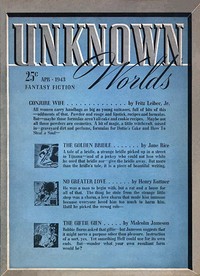
For The giftie gien — A Closer Reading, the stored edition analysis reports 8,610 words, 38 min estimated reading time, and 1 detected text section.
The text analysis averages about 15.1 words per sentence, while the detected sections provide another way to judge how the source is divided.
Project Gutenberg metadata also associates the work with “Short stories,” connecting these edition facts with the source record’s subject description.
Explore this collection
These alternatives are selected using recorded categories and estimated reading time.
About 39 minutes
Fantasy Juvenile Worlds
8,803 recorded words. 1 minutes difference from this book's estimate.
View Gutenberg source #23063About 36 minutes
Fantasy Juvenile Worlds
8,176 recorded words. 2 minutes difference from this book's estimate.
View Gutenberg source #71377About 36 minutes
Fantasy Juvenile Worlds
8,182 recorded words. 2 minutes difference from this book's estimate.
View Gutenberg source #73463Search stored excerpts and compare books → Choose by your preferences →
Choices use stored catalog measurements. Estimates vary with reading speed. A shared category is a catalog label, not a claim that two books have the same argument or literary quality.
Search reads excerpt text stored with this catalog and links to its associated Gutenberg record. The connection is stored in the site database; this tool does not recheck that every excerpt is word-for-word identical to that external record. Excerpt search does not cover every chapter and does not verify historical publication dates.
Catalog snapshot checked: 2026-09-25. Coverage: 92 public books, 92 available source excerpts.
Read the complete public-domain text at its original source.
Read on Project GutenbergThe story opens in a sales manager's office at five o'clock, where J. C. Chisholm observes his staff with smug satisfaction. He boasts to his secretary, Miss Delmar, that he can predict their every move—and proves it with a stopwatch. The prose lingers on his pudgy hands, his pink face, and his self-regard, painting a portrait of a man who mistakes routine for insight. Yet Miss Delmar's “hard, set face” and her private label for this ritual as the “psychic hour” hint at a hidden skepticism. The office setting feels solid and familiar, but the narrator's ironic tone—noting that Chisholm “was quite satisfied with himself”—prepares the reader for a reversal.
This mundane scene is the springboard for a fantasy that dismantles Chisholm's certainties. The title, a Scots phrase meaning “the gift given,” signals that what follows is a reckoning with how one is perceived by others.
The transition from office to afterlife is abrupt. After Chisholm's death, he finds himself on a stage facing a demon and a hall of ghostly figures. The demon addresses them as “Fellow heels,” and the crowd jeers with epithets like “chiseler” and “stuffed shirt.” The reader learns that these specters are “other people's estimates” of Chisholm, and the real Chisholm—the one who felt so self-assured—is merely “one aspect.” The demon explains that the ghost recognized by the afterlife is a composite of all these perceptions.
The procession of shades is described with grotesque specificity: one is a “slender wisp of smoke with the lumpy feet.” The scene inverts the opening's theme of prediction. Chisholm, who prided himself on knowing others, now cannot recognize himself in the distorted caricatures. The story shifts from social comedy to metaphysical trial, but the tone remains wry and concrete.
The excerpts show that the story's middle section develops the trial as a series of exhibits. Each ghost represents a different person's view of Chisholm: a customer, a subordinate, a rival. The demon acts as a judge, and the “convention” of shades votes or coalesces to form the official ghost. The process is both absurd and logical—a bureaucratic afterlife where reputation is quantified.
Notably, the story does not explain how Chisholm died or what his life's actions were. The focus stays on the gap between his self-image and the external record. The reader must infer his flaws from the insults hurled and the nature of the caricatures. The narrative withholds judgment, letting the parade of grotesque doubles speak for themselves. This restraint makes the fantasy feel less like a moral lesson and more like a thought experiment about identity.
Jameson's prose is efficient and slightly sardonic. The opening paragraph uses a long, periodic sentence to establish Chisholm's complacency: “Mr. J. C. Chisholm, sales manager … folded his pudgy hands … and sat back … to watch the daily ritual.” The dialogue is crisp, with Chisholm's “Har-rum” and the demon's blunt “Fellow heels” establishing character quickly.
The story is structured as a frame: the office scene is a prologue, the afterlife tribunal the main event. The excerpts suggest that the narrative returns to the office only in memory or implication. The title, from Robert Burns's poem “To a Louse” (“O wad some Power the giftie gie us / To see oursels as ithers see us!”), is never quoted in the text, but the theme is explicit. The reader who knows the poem will recognize the ironic contrast between Chisholm's desire to see others and his inability to see himself.
The excerpts break off before the trial concludes, so the reader does not learn the final composite ghost or Chisholm's fate. The demon's remark that “the verdict is already found and the sentence fixed” suggests a predetermined outcome, but the process of coalescence may change Chisholm's self-understanding. The story may end with a transformed ghost or a punishment; the excerpts do not reveal which.
Also unclear is the role of Miss Delmar, the secretary who sees through Chisholm. She appears only in the opening, but her perspective might echo in the afterlife—perhaps one of the shades is her estimate. The reader must watch for whether any of the caricatures match her silent contempt. The story's brevity (8,610 words) means it likely resolves quickly, but the excerpts leave room for surprise.
Read this story with attention to the office details: the stopwatch, the galoshes, the “baby-doll beauty” of Miss Trevelyan. These mundane observations are the raw material for the afterlife's judgment. The fantasy does not abandon the real world but uses it as evidence. Notice how each character's voice—Chisholm's bluster, the demon's irreverence, the crowd's jeers—contributes to the composite portrait. The title's promise of seeing oneself as others do is fulfilled not through introspection but through a surreal, bureaucratic process that is both comic and unsettling.
That rainy afternoon, the ghostly tribunal in The giftie gien unsettled me more than I expected—how little of our self we actually control. Afterwards, I kept thinking about perception versus truth, and found myself drifting toward Peter Pettigrew's prisoner — Text and Context, which circled the same quiet unease from a different angle. The rain kept falling. One book simply handed me to the other.
Build a private reading journal entry for this title.


![Cover of Some Short Stories [by Henry James] — Inside the Classic](https://cuiep.com/storage/media/covers/pg2327.jpg)






