About 265 minutes
Tales from Two Hemispheres — Background and Themes
Historical Psychological Social Fiction
60,905 recorded words. 4 minutes difference from this book's estimate.
View Gutenberg source #299
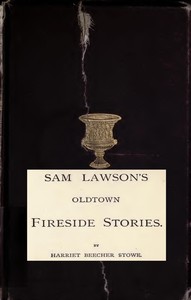
Sam Lawson's Oldtown Fireside Stories With Illustrations — Themes and Context can be approached with a clearer sense of reading commitment from its source measurements: 61,652 words, 4 hr 29 min estimated reading time, and 7 detected text sections.
The text analysis averages about 23.2 words per sentence, while the detected sections provide another way to judge how the source is divided.
Project Gutenberg metadata also associates the work with “Short stories, American,” connecting these edition facts with the source record’s subject description.
Explore this collection
These alternatives are selected using recorded categories and estimated reading time.
About 265 minutes
Historical Psychological Social Fiction
60,905 recorded words. 4 minutes difference from this book's estimate.
View Gutenberg source #299About 264 minutes
Historical Psychological Social Fiction
60,537 recorded words. 5 minutes difference from this book's estimate.
View Gutenberg source #2179About 274 minutes
Historical Psychological Social Fiction
62,827 recorded words. 5 minutes difference from this book's estimate.
View Gutenberg source #32117Search stored excerpts and compare books → Choose by your preferences →
Choices use stored catalog measurements. Estimates vary with reading speed. A shared category is a catalog label, not a claim that two books have the same argument or literary quality.
Search reads excerpt text stored with this catalog and links to its associated Gutenberg record. The connection is stored in the site database; this tool does not recheck that every excerpt is word-for-word identical to that external record. Excerpt search does not cover every chapter and does not verify historical publication dates.
Catalog snapshot checked: 2026-09-25. Coverage: 92 public books, 92 available source excerpts.
Read the complete public-domain text at its original source.
Read on Project GutenbergThe book opens with a first-person narrator recalling how he and his sister Hariet would beg Sam Lawson for stories by the firelight, while Aunt Lois rattles tea-things and grandmamma knits. This framing device immediately establishes the oral tradition that shapes the collection: stories are told aloud, in a specific social setting, with listeners interrupting and questioning. The narrator explicitly contrasts this with modern media—no magazines, no daily papers, no theatre—and notes that chimney-corner storytelling was an art form when winter darkness stretched from half-past four. The excerpts show that Sam's tales are not presented as polished literature but as living performances, complete with dialect, digressions, and audience reactions.
Sam Lawson speaks in a thick New England dialect, full of contractions and colloquialisms: "Wal, there 'tis: you know jest as much about it as I do." His listeners—the children and, by extension, the reader—are part of the tale. In "The Ghost in the Cap'n Brown House," the boy narrator interrupts with "What did Aunt Lois mean?" and Sam answers directly, creating a conversational rhythm. The excerpts show that Stowe uses this frame to comment on belief: Aunt Lois represents skeptical Sadducees who "won't believe in angel nor sperit," while the grandmother defends the possibility. The stories thus become a vehicle for exploring how communities interpret strange events.
Across the excerpts, ghosts appear not as gothic specters but as ambiguous presences tied to everyday objects: a locked door, a clock striking four, a woman at a window. In "The Ghost in the Cap'n Brown House," the ghost is first seen by Cinthy, who checks under the bed and in the closet—a practical, domestic response. The story then spreads through gossip: Hepsy tells Aunt Sally Dickerson, who tells the minister's wife, and soon the whole town knows. Stowe lingers on the mechanics of rumor—"it seemed to 'a' got all over Old town"—and the way details shift: some say the woman is a nun from Spain, others that she walks among bean-poles and squash-vines. This grounding in household routines and community chatter gives the supernatural a homely, credible texture.
The excerpts reveal that Stowe often refuses to resolve her ghost stories. When the children ask Sam what the apparition was, he replies, "Wal, there 'tis: you know jest as much about it as I do." The tale ends with multiple explanations—dream, trick, or genuine spirit—left in play. This open-endedness is structural: the stories are not puzzles to be solved but experiences to be shared. The frame narrator notes that "faith and credence were in the very air" of early Massachusetts, and the tales reflect that atmosphere of uncertainty. Readers are invited into the same position as the fireside listeners: to wonder, to doubt, and to enjoy the telling itself.
Stowe embeds her stories in a specific historical moment: post-Revolutionary New England, when "two-thirds of New England was then dark, unbroken forests" and the Atlantic "dashed its moaning waters" to isolate the region. The opening pages describe a world without entertainment, where storytelling filled the long winter evenings. This setting is not mere backdrop but active context: the isolation and darkness make ghost stories plausible. The excerpts also mention "the annual election, or Thanksgiving festival" as rare social events, and the tales reference local landmarks like the store and tavern. By grounding the supernatural in a recognizable, almost ethnographic portrait of Oldtown, Stowe gives her fireside stories a documentary weight.
These stories reward a reader who listens for the cadence of Sam's voice and the interruptions of his audience. Pay attention to how Stowe uses dialect not as decoration but as a tool for characterization and authenticity. The tales are best read aloud, or at least with an ear for the rhythm of question and answer, gossip and speculation. The unresolved endings are not flaws but invitations to imagine alongside the characters.
Winter evenings by the fire, those old tales of Sam Lawson, they linger—not for plot, but for the particular warmth of a voice settled into its own silences. I find that same unhurried companionship in A Collection of Stories, Reviews and Essays — Context and Discussion, whose essays murmur like a friend remembering, quietly, that the commonplace holds enough wonder for any lifetime.
Use these questions to collect your thoughts before moving on.









