About 176 minutes
Victorian Short Stories: Stories of Successful Marriages — Reading Companion
Fantasy Juvenile Worlds
40,271 recorded words. 50 minutes difference from this book's estimate.
View Gutenberg source #15252
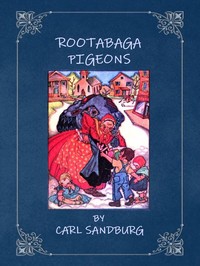
Rootabaga pigeons — Edition Insights can be approached with a clearer sense of reading commitment from its source measurements: 28,901 words, 2 hr 6 min estimated reading time, and 37 detected text sections.
The text analysis averages about 21.8 words per sentence, while the detected sections provide another way to judge how the source is divided.
Project Gutenberg metadata also associates the work with “Fantasy literature,” connecting these edition facts with the source record’s subject description.
Explore this collection
These alternatives are selected using recorded categories and estimated reading time.
About 176 minutes
Fantasy Juvenile Worlds
40,271 recorded words. 50 minutes difference from this book's estimate.
View Gutenberg source #15252About 71 minutes
Fantasy Juvenile Worlds
16,235 recorded words. 55 minutes difference from this book's estimate.
View Gutenberg source #334About 189 minutes
Fantasy Juvenile Worlds
43,379 recorded words. 63 minutes difference from this book's estimate.
View Gutenberg source #2327Search stored excerpts and compare books → Choose by your preferences →
Choices use stored catalog measurements. Estimates vary with reading speed. A shared category is a catalog label, not a claim that two books have the same argument or literary quality.
Search reads excerpt text stored with this catalog and links to its associated Gutenberg record. The connection is stored in the site database; this tool does not recheck that every excerpt is word-for-word identical to that external record. Excerpt search does not cover every chapter and does not verify historical publication dates.
Catalog snapshot checked: 2026-09-25. Coverage: 92 public books, 92 available source excerpts.
Read the complete public-domain text at its original source.
Read on Project GutenbergCarl Sandburg's Rootabaga Pigeons (1923) opens with the Potato Face Blind Man telling two stories, establishing a narrative voice that is both folksy and deliberately strange. The book's language oscillates between the rhythmic repetition of tall tales—"bingety blinged good-by to me"—and sudden, lyrical images: "the moon is a gold door with silver transoms." Sandburg builds a world where a green rat runs a thousand miles twice, and a hen named Shush Shush lays an egg in the postmaster's hat. The pacing varies widely: some stories accumulate absurd details in long, looping sentences, while others, like the bee-bag sequence, compress dialogue into quick, almost theatrical exchanges.
The Potato Face Blind Man appears in multiple sections, framing stories within stories. In the excerpt, he sits "hugging his accordion" and comments on the tales told by Dippy the Wisp and Slip Me Liz. His interjections—"This is nice as the rats on the moon in the middle of the winter locking their mittens in the ice box"—are themselves miniature nonsense poems. He does not merely introduce tales; he judges them, asking for more or shutting them down: "Put the bees back in the bee-bag—they buzz too many secrets, syllables and snitches." This framing device gives the collection a layered, oral quality, as if the reader is eavesdropping on a performance. The Potato Face's voice is distinct from the characters he hosts: slower, more reflective, yet equally playful.
Sandburg uses repeated phrases to create a chant-like rhythm, especially in the bee stories. Each bee returns home with a formulaic report: "I flew and I flew and buzzed and buzzed far, far away till I came where I met the…" The endings echo each other: "I am so, so glad to be home again." This repetition builds a pattern that the reader anticipates, but the content of each journey is wildly different—a king of paper sacks, a queen of empty hats. The dialogue also includes internal rhymes and alliteration: "fat rats, fat bats, fat cats." The pacing slows when the Potato Face speaks, then quickens in the bees' breathless accounts. The contrast between the deliberate frame and the rapid-fire embedded tales creates a dynamic reading experience.
Throughout the excerpt, familiar items are defamiliarized. Hats appear as empty vessels that become characters: the Queen of the Empty Hats presides over a city where "the only people were hats, empty hats." A postage stamp sits on a bee's nose. The King of the Paper Sacks lives in a palace that is "full of pink and purple peanuts walking up and down the stairs washing their faces." These transformations are presented without explanation, as if the logic of the Rootabaga Country is self-evident. The narrative voice treats the absurd with deadpan seriousness, which heightens the comic effect. Sandburg's pacing lingers on these details—the peanuts "stitching handkerchiefs," the rats changing hats—giving the reader time to absorb the strangeness before moving on.
Readers approaching Rootabaga Pigeons should listen for the shifts in tempo: the Potato Face Blind Man's measured commentary versus the breathless reports of bees and the looping adventures of characters like Slipfoot. The book rewards attention to repeated motifs—hats, pigeons, buttons, moons—that recur across stories, creating a cohesive but nonsensical geography. Sandburg's language is best read aloud, where its rhythms and nonsense syllables come to life.
The Potato Face Blind Man’s world—where bees gossip for paper kings—reminded me of my grandfather’s worn copy of Rootabaga, read aloud on slow Sundays. Something in its tender absurdity echoes what I felt opening Pink Ears — A Reader’s Guide: that quiet tilt where logic loosens, and I’m just holding the strange, warm weight of a story’s ear.
Save your reaction, strongest insight, and memorable passage.


![Cover of Some Short Stories [by Henry James] — Inside the Classic](https://cuiep.com/storage/media/covers/pg2327.jpg)






